How to Repair a Loose Seam in Your Clothes
Step-by-step instructions for repairing split, popped, or unraveling garment seams by hand using an overlapping lockstitch backstitch.
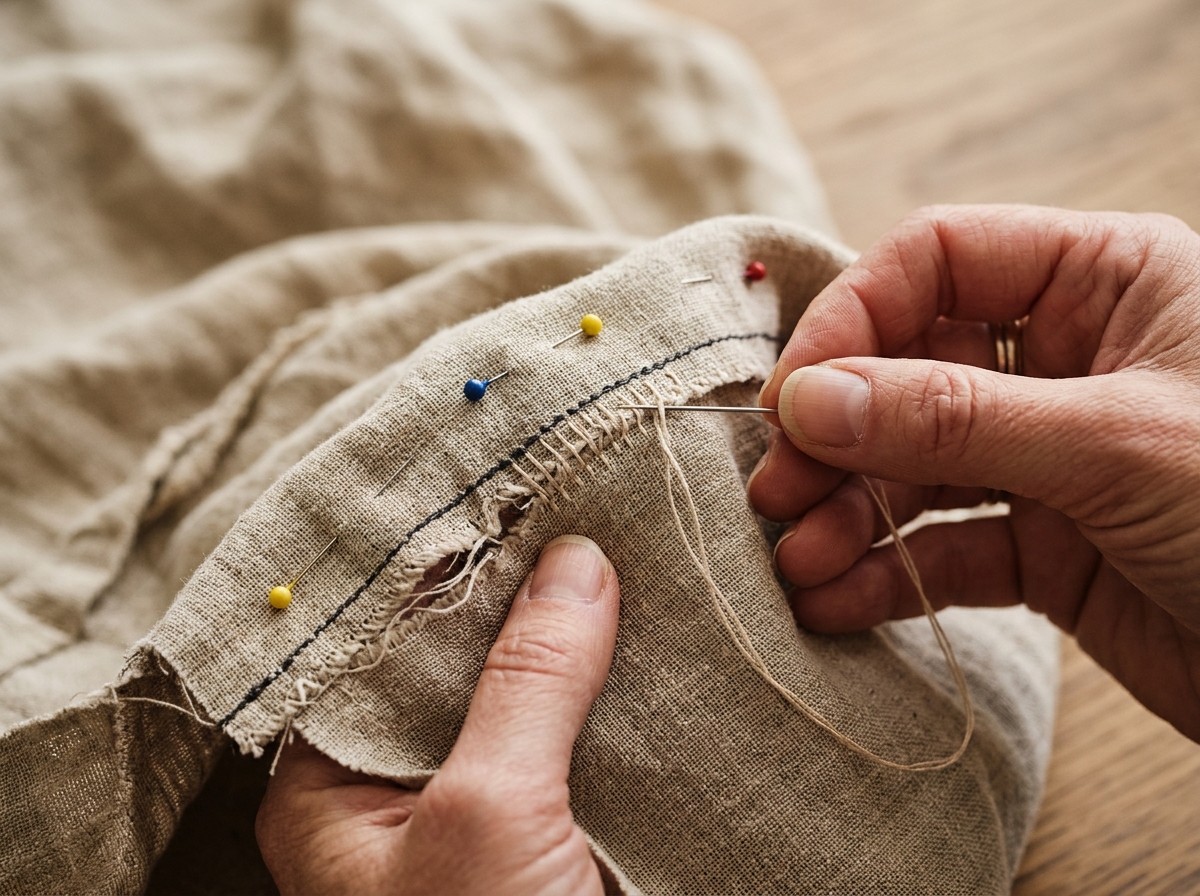
A popped seam along a side pocket, sleeve, or trouser leg is one of the most accessible clothing repairs. In many cases, the garment fabric is undamaged—only the sewing thread popped under sudden physical strain or normal wash wear.
Catching an open seam early prevents raw edges from fraying and stops the opening from expanding. In this guide, you will learn how to identify the failure point, overlap intact original stitching, and execute a hand backstitch that provides strong, reliable reinforcement for everyday wear.
Materials Required
- All-purpose polyester thread: Matched in color and weight to the garment internal seam thread.
- Sewing pins: To align the original seam line accurately before stitching.
Tools Needed
- Hand sewing needle: Size 7 or 8 sharp needle suited for medium-weight fabrics.
- Fabric snips or seam ripper: To trim broken loose threads cleanly.
- Steam iron and pressing cloth: To press the seam flat after stitching.
Step-by-Step Instructions
Locate the Intact Factory Stitches
Never start stitching right where the hole begins. Identify the last 3 or 4 secure machine stitches on either side of the split. Your repair must overlap these existing stitches by at least 1/2 inch (1.2 cm) on both ends to lock the original thread tails permanently.
Thread and Anchor the Needle
Thread your needle with a single strand of strong polyester thread (about 20 inches) and tie a knot at the end. Insert your needle 1/2 inch into the secure original stitching, bringing it through both layers along the original seam line.
Execute the Hand Backstitch
Bring the needle up through the fabric. Step backward 1/8 inch (3 mm) to where the previous stitch ended, push down through all layers, and slide forward under the fabric to emerge 1/8 inch ahead of the working thread. Pull through gently.
Follow the Original Seam Line
Continue backstitching across the open gap, following the original needle punctures or pressed crease line. Maintain uniform stitch length and consistent thread tension so the seam lies flat.
Overlap the Opposite Factory Stitches
Once you cross the gap, continue your backstitch for another 1/2 inch into the intact factory stitching on the other side. This locks both sides of the repair securely.
Tie Off and Press the Seam
Take a small stitch in the seam allowance, loop the thread twice around the needle point, and pull to create a knot. Repeat once more. Snip the thread leaving a 1/4-inch tail. Press the seam flat with steam from the inside, then turn right side out.
Common Mistakes & Solutions
Starting and stopping stitches exactly at the gap edges
Why it happens: The original machine thread continues to unravel as soon as the garment is worn.
Correction: Always overlap at least 1/2 inch into secure existing stitching on both sides.
Using a simple running stitch instead of a backstitch
Why it happens: Running stitches do not lock together; when pulled sideways, the seam gaps and exposes threads.
Correction: Use backstitch, which locks each individual stitch in place.
Pulling the thread too tight while stitching
Why it happens: The seam allowance puckers and causes visible rippling on the outside of the garment.
Correction: Keep thread tension smooth and neutral, resting flat against the fabric layers.
Frequently Asked Questions
When is a loose seam too damaged for a simple hand repair?
If the fabric along the seam allowance has completely frayed away past the seam line (leaving shredded threads rather than clean cloth), a simple stitch will pull right out. You must first reinforce the edge with lightweight iron-on interfacing or enclose it in bias tape before restitching, or use a sewing machine if extensive rebuilding is required.
Can I repair a seam on stretchy knit clothing with backstitch?
For moderate stretch, backstitch has some natural give. For high-stretch athletic wear or leggings, use a tiny zigzag hand stitch or flexible cross-stitch so the seam can stretch without snapping the thread.
Is a hand-sewn seam repair as strong as a factory machine seam?
A carefully executed hand backstitch provides excellent everyday strength for low-to-medium stress areas like side seams, sleeve hems, and pocket edges. However, high-stress structural seams (like crotch curves on fitted jeans or sportswear) experience heavy cyclic loads and benefit from machine lockstitching or serging when available.